
 Image 1 of 5
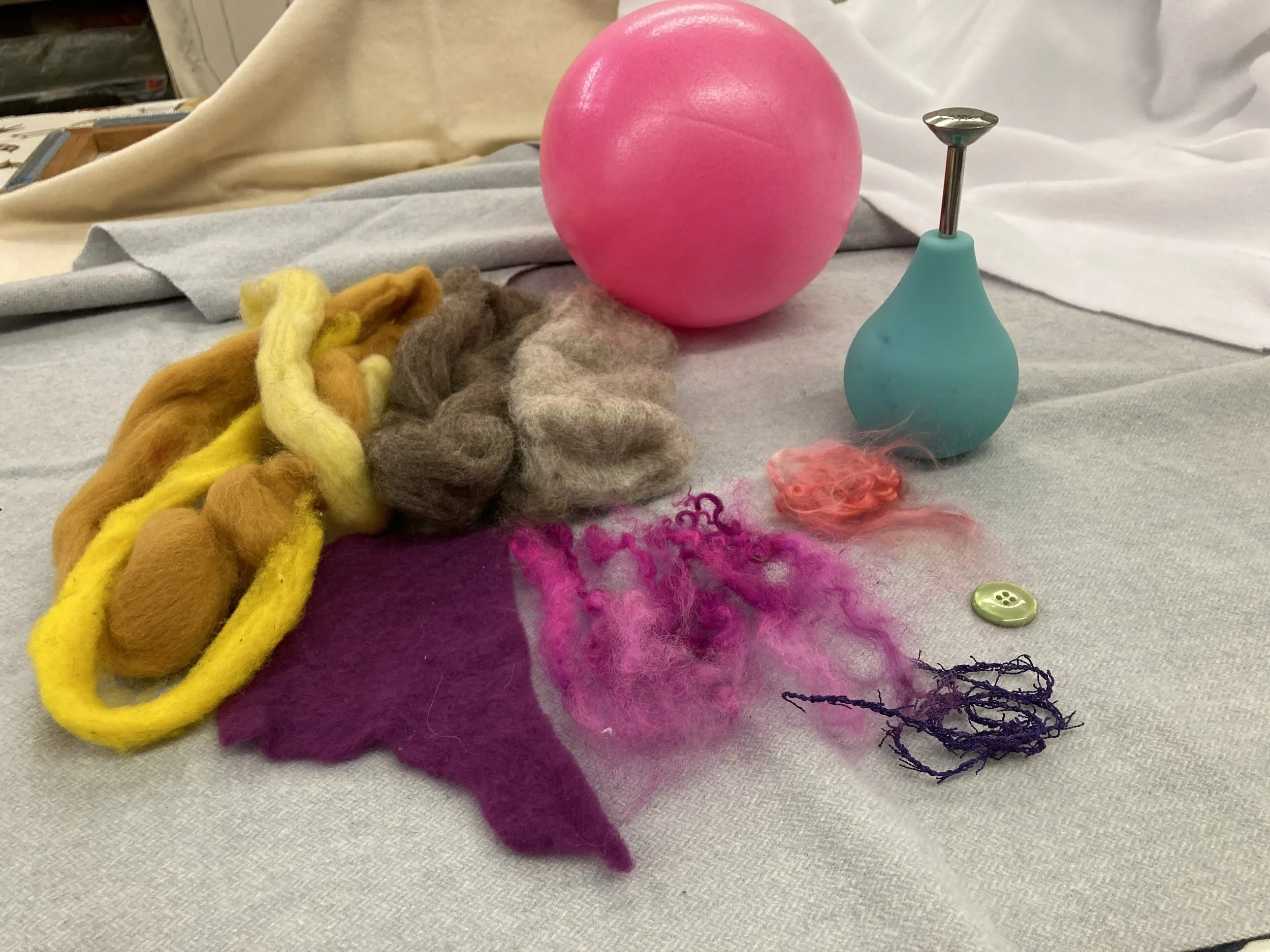 Image 2 of 5
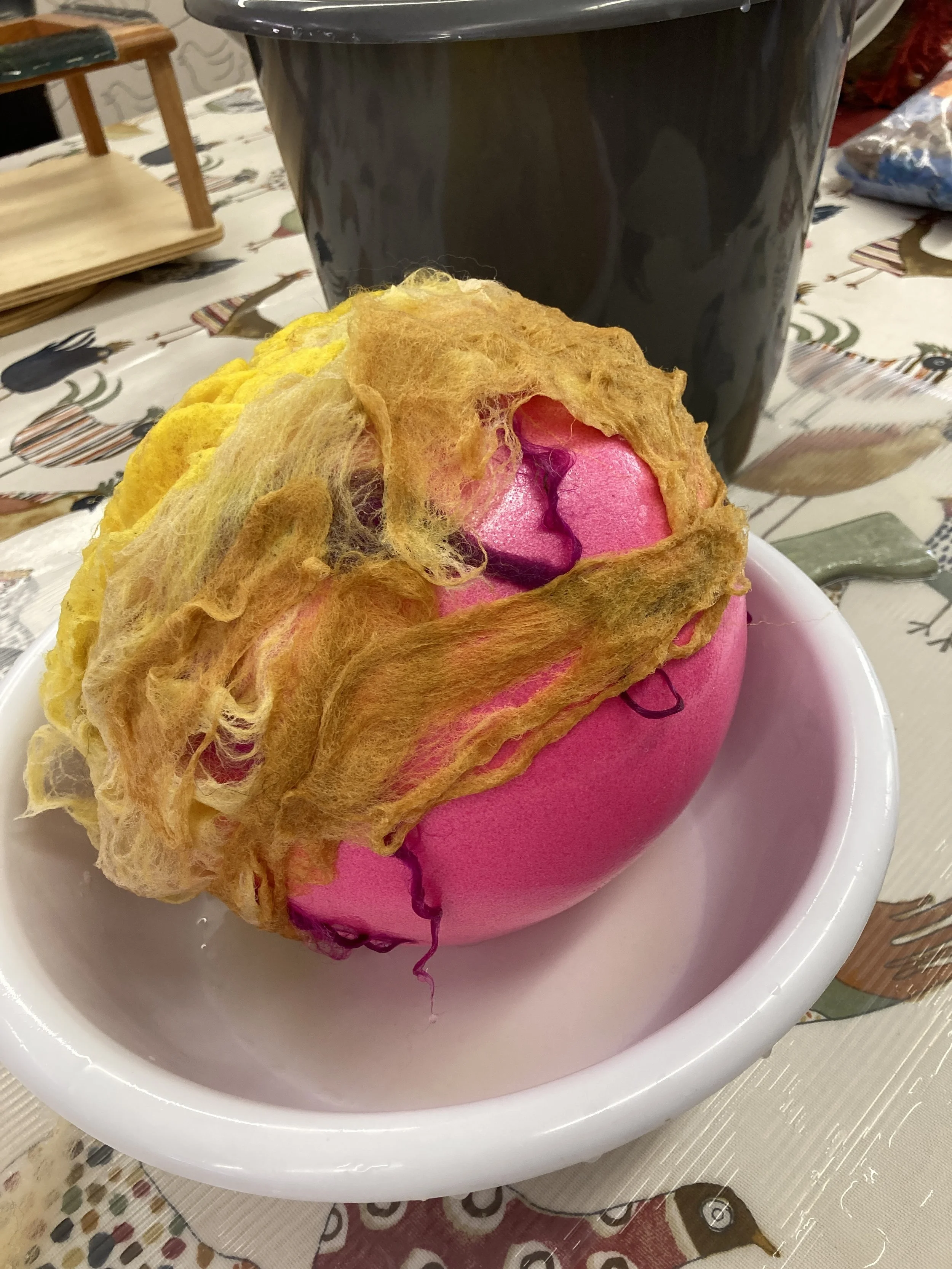 Image 3 of 5
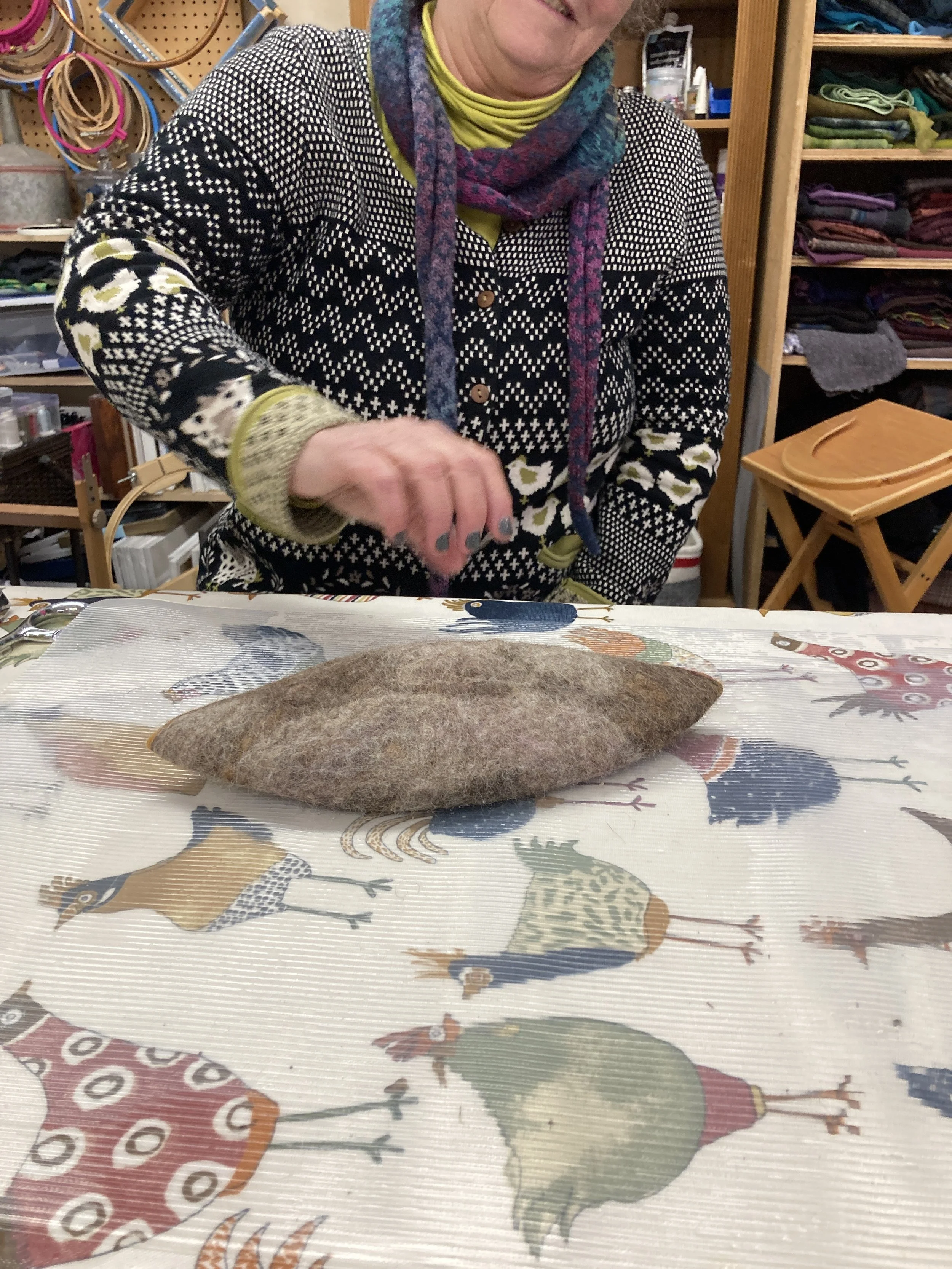 Image 4 of 5
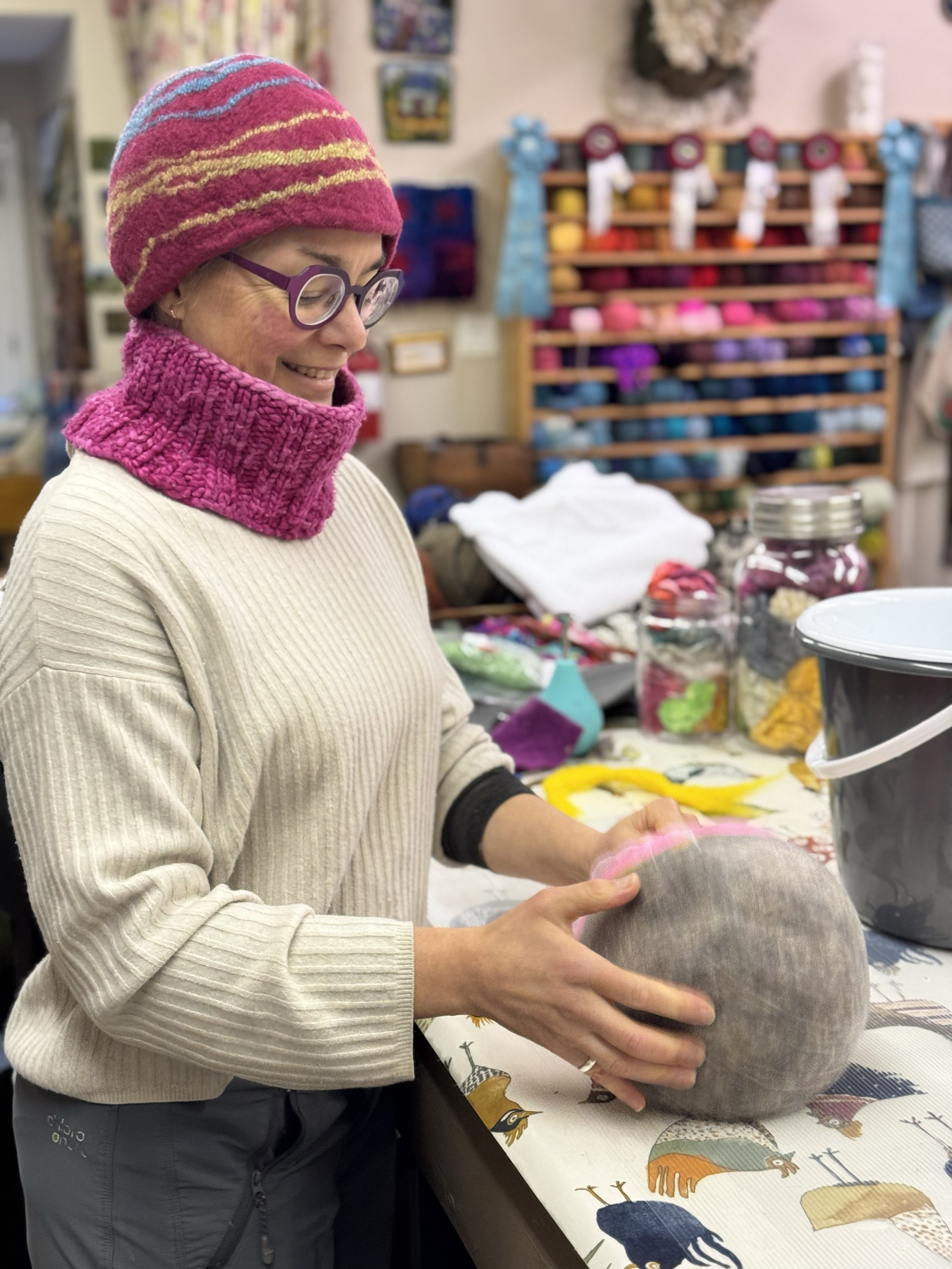 Image 5 of 5
Saturday June 20
10:00 am - 4:00 pm
Instructors: Tania Martin & Yvonne Iten-Scott
Materials Fee: $30 (paid directly to the Instructors)
Students: 12
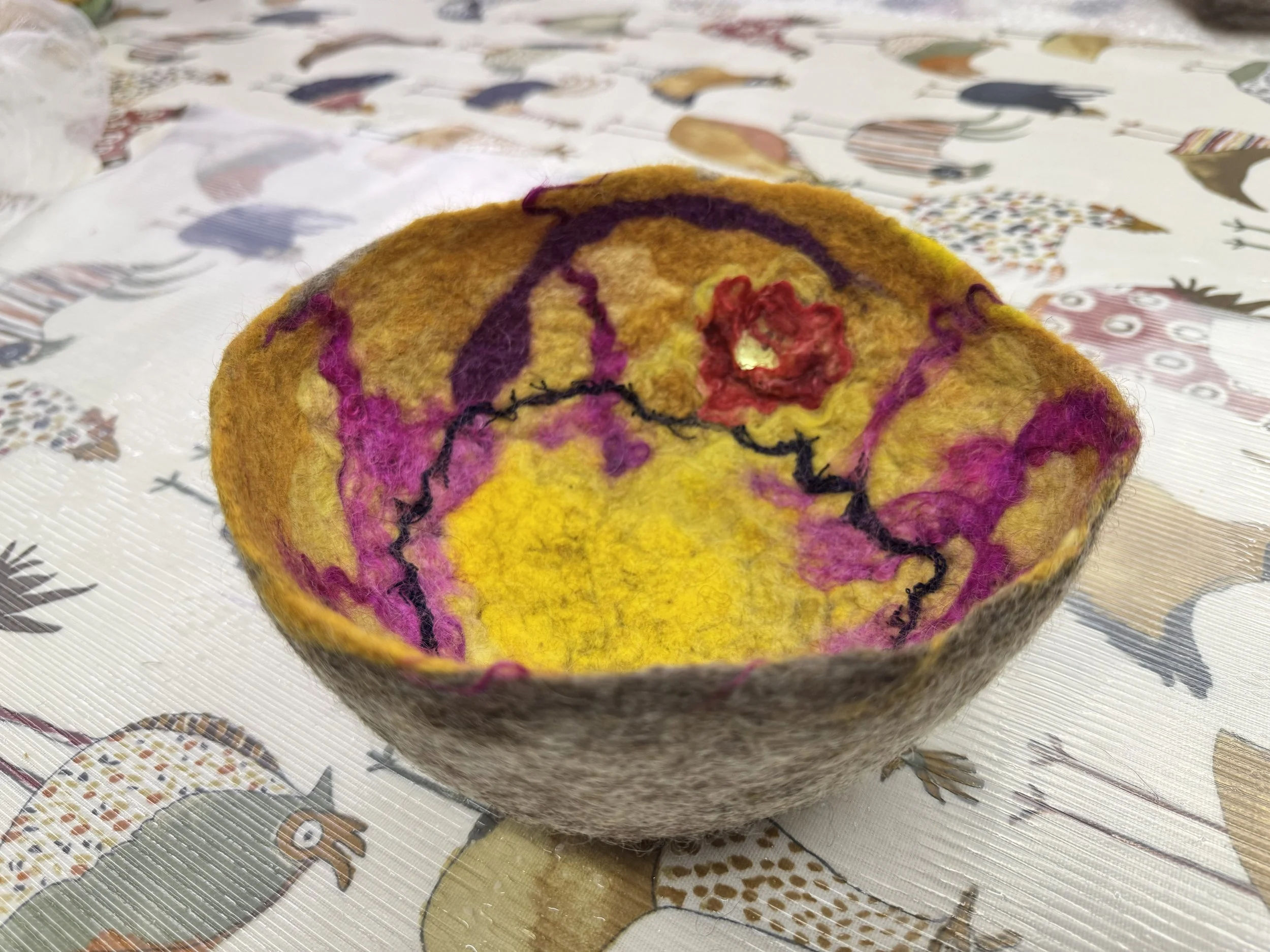
Felting is one of the oldest ways to make cloth and an ancient form of fibre art. During this workshop, we will make a vessel using a resist and Canadian-grown and processed wool.
Felt is a nonwoven fabric created by intermeshing wool fibres. Wet felting techniques rely on wetting, rubbing and agitating the fibres so that they lock together tightly and cannot be pulled apart. Adding soap to the water helps open the microscopic scales on the individual fibres and heat accelerates the felting process. Felt has excellent thermal properties and can be water resistant.
After a brief introduction to the history of felting, we will learn to:
Prepare the resist
Lay the fibre correctly onto the resist
Felt and shape the vessel
Embellish the surface with wool yarns or encrust flat buttons and beads into the vessel during the felting process
Full and shape the vessel
Optionally add surface decoration afterwards with embroidery and beading
After the workshop, participants will have acquired the knowledge needed to create their own vessels using a resist. No prior experience needed.
Saturday June 20
10:00 am - 4:00 pm
Instructors: Tania Martin & Yvonne Iten-Scott
Materials Fee: $30 (paid directly to the Instructors)
Students: 12
Felting is one of the oldest ways to make cloth and an ancient form of fibre art. During this workshop, we will make a vessel using a resist and Canadian-grown and processed wool.
Felt is a nonwoven fabric created by intermeshing wool fibres. Wet felting techniques rely on wetting, rubbing and agitating the fibres so that they lock together tightly and cannot be pulled apart. Adding soap to the water helps open the microscopic scales on the individual fibres and heat accelerates the felting process. Felt has excellent thermal properties and can be water resistant.
After a brief introduction to the history of felting, we will learn to:
Prepare the resist
Lay the fibre correctly onto the resist
Felt and shape the vessel
Embellish the surface with wool yarns or encrust flat buttons and beads into the vessel during the felting process
Full and shape the vessel
Optionally add surface decoration afterwards with embroidery and beading
After the workshop, participants will have acquired the knowledge needed to create their own vessels using a resist. No prior experience needed.