Saturday December 5 - Sunday December 6
10:00 am - 4:00 pm
Instructor: Simone LeBlanc
Materials Fee: $110 (paid directly to the Instructor)
Students: 12
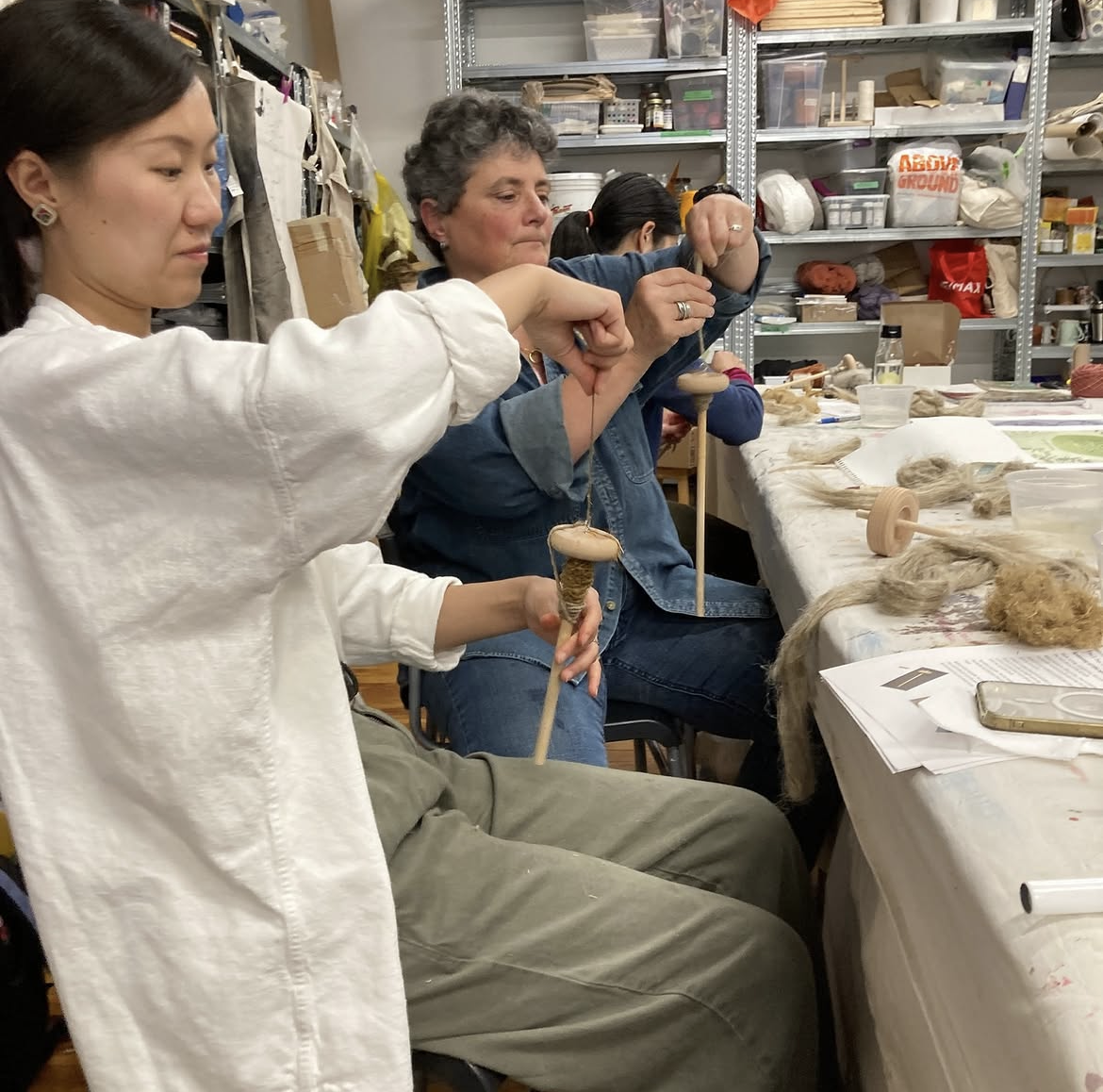
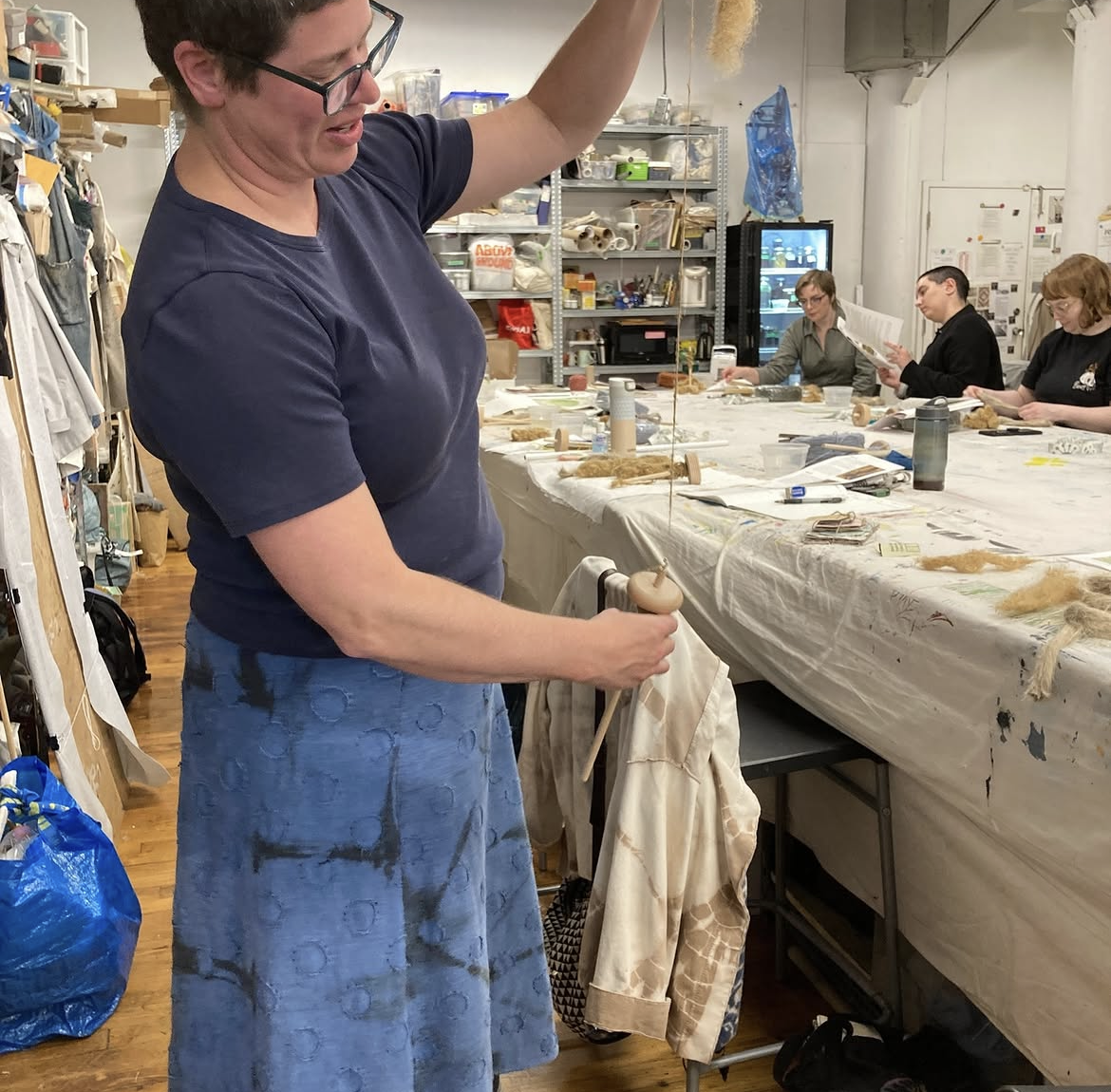
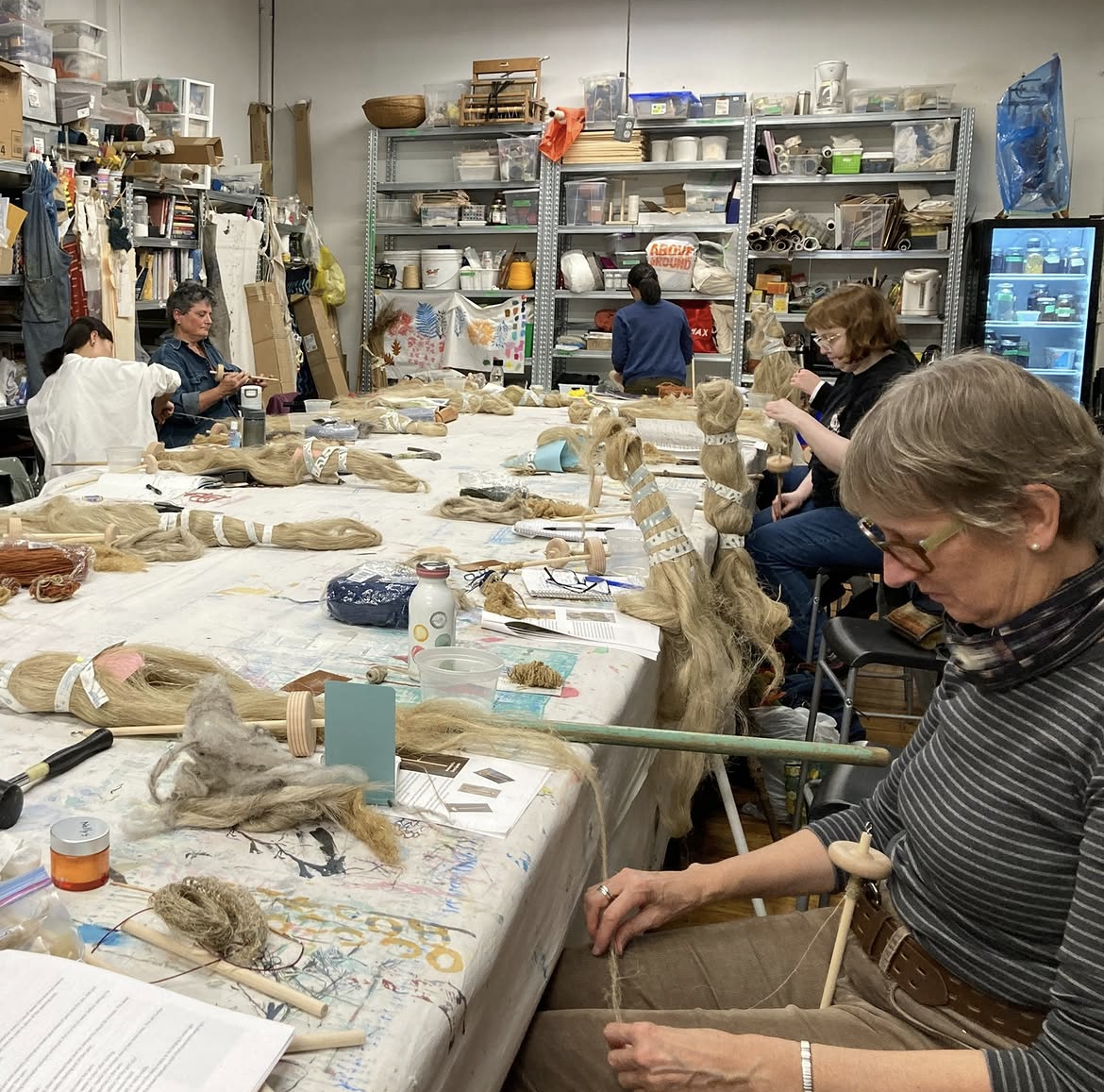
Day 1: Our workshop will begin with transforming plant fibres into beautiful, functional yarn and thread in this hands-on workshop. We will practice dry and wet spinning on drop spindles and wheels, and learn to assemble and use a simple distaff. Participants will gain insight on the unique properties of bast fibres and leave with skills from spinning to scouring to create their own plant-based yarn.
Day 2: The second day of the workshop focuses on growing, foraging, and preparing local plants for yarn and thread. Through a combination of lectures, demonstrations, and hands-on activities, participants will explore each step of this ancient process—from sowing and growing flax to identifying and foraging nettles, milkweed, dogbane, and fireweed. We will extract fibres from these plants and learn how to prepare and spin them into yarn, gaining a deeper understanding of the materials and traditional techniques along the way.
Materials Provided by Instructor:
Drop spindle kit, distaff kit, Flax line fibre, flax tow fibre, retted plant stalks, processing equipment.
Materials provided by participant:
Participants to bring a broom handle or tree branch, butter knife, and a small shallow dish.